The DtP model: direct to patient delivery in clinical trials
By Kelly Frend
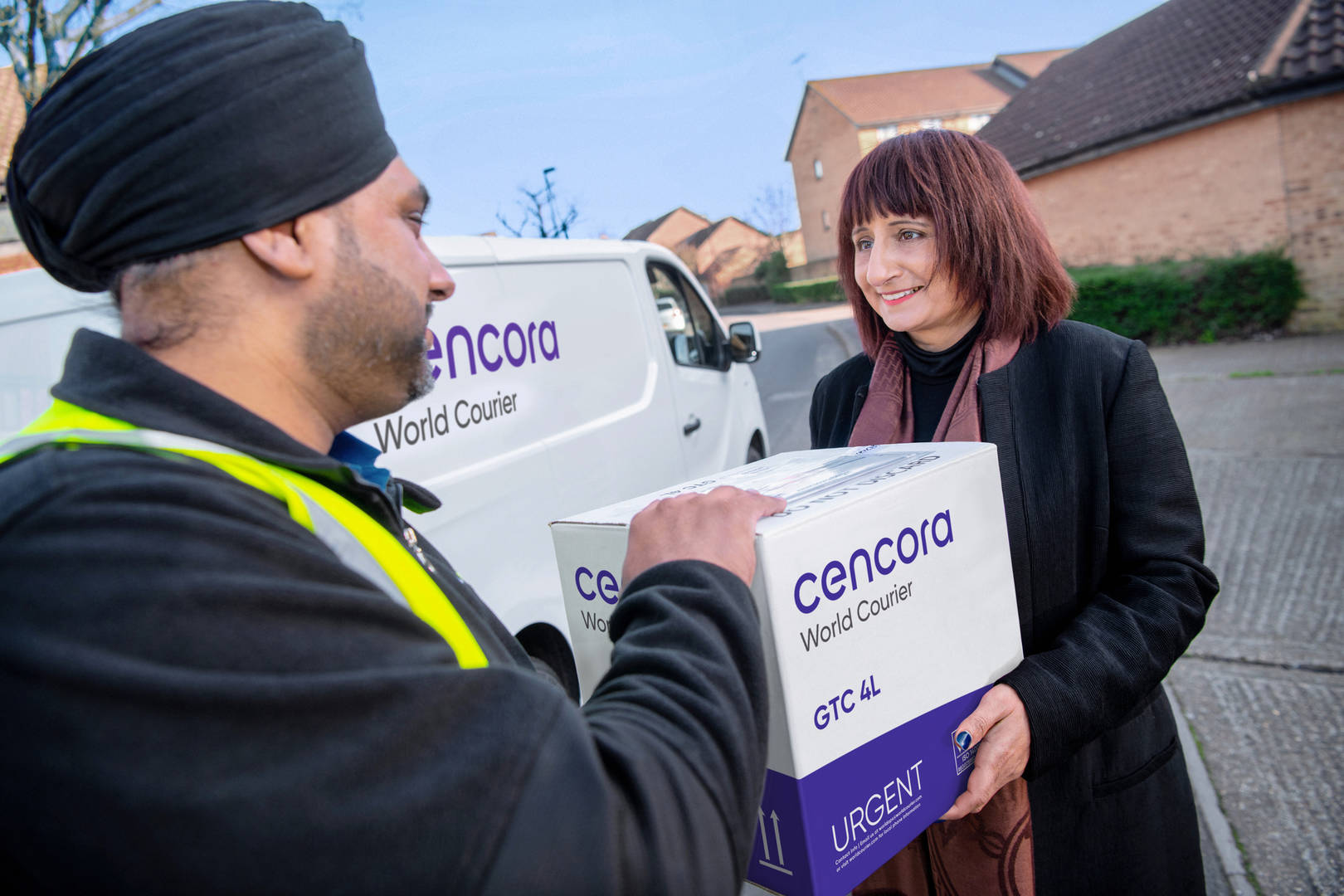
Table of contents
What is the direct-to-patient model?
What are the key components of the direct-to-patient model?
What are the main benefits of the direct-to-patient model?
What are the challenges of the direct-to-patient model?
What is a decentralized clinical trial and how does the direct-to-patient model help?
Key points to consider when choosing the DtP model for decentralized clinical trials
FAQs for direct-to-patient delivery in clinical trials
Direct-to-patient model FAQs
Related content
What is the direct-to-patient model?
The direct-to-patient model — often shortened to the DtP model — is an approach in which pharmaceutical companies and clinical trial sponsors deliver medications or investigational products directly to a patient's home. It bypasses traditional intermediaries such as retail pharmacies and clinical sites.
In clinical research, this means investigational medicinal products (IMPs) and study materials are shipped to a participant's home rather than requiring them to attend a clinic. This is especially valuable in oncology and rare disease trials, where patients are often geographically dispersed and far from a specialist center.
What are the key components of the direct-to-patient model?
The DtP model is not a single solution. It covers several distinct approaches, each suited to different therapeutic areas and regulatory environments.
Direct-to-patient sales and dispensing
Manufacturers or licensed dispensing entities deliver products directly to patients, removing wholesalers and retail pharmacies from the chain. This gives manufacturers tighter control over product integrity and can reduce both cost and delivery time.
Digital health and telehealth integration
Modern DtP programs are built on digital infrastructure. Virtual consultations allow for remote diagnosis and e-prescriptions ahead of dispatch, meaning that assessments which previously required a site visit can now happen remotely. For direct to patient clinical trials, this reduces participant burden without compromising data quality.
Decentralized clinical trials (DCTs)
A decentralized clinical trial is one in which research activities — including IMP delivery and monitoring — are carried out in a patient's home rather than at a central site. The global DCT market was valued at USD 9.56 billion in 2025 and is projected to reach USD 29.37 billion by 2034, growing at a CAGR of 13.2%. ¹
DtP registries
DtP registries collect patient-reported data through mobile apps or web tools, enabling real-world outcome tracking without any clinical site involvement. This gives sponsors faster, richer insight into adherence and treatment response.
What are the main benefits of the direct-to-patient model?
Improved patient experience
The DtP model opens access to trials and treatments for patients who would otherwise be excluded — those living far from specialist centers, those with limited mobility, and those who are uninsured or underinsured. It removes the travel burden that is, for many patients, the primary reason for dropping out.
Higher medication adherence
Home delivery, automated refill scheduling, and integrated digital support all reduce the friction that leads to non-adherence. This matters most in direct to patient clinical trials, where retention is critical. 85% of trials fail to retain sufficient patient numbers, and the average dropout rate is 30%.³ The DtP model directly addresses both.
Direct data and insights
By delivering directly to patients and capturing outcomes through digital tools, manufacturers gain real-time visibility into patient behavior and treatment response. This supports better, faster decisions in both commercial programs and clinical research.
Affordability and speed
Bypassing pharmacy benefit managers (PBMs) and traditional payer authorization processes can meaningfully reduce costs and compress time to treatment. For direct to patient trials specifically, faster IMP delivery translates into shorter study timelines and a more agile response to protocol changes.
What are the challenges of the direct-to-patient model?
Regulatory compliance
The DtP model operates under significant regulatory scrutiny. Sponsors must navigate national and international rules covering IMP dispensing, data privacy, and clinical marketing standards — and these vary considerably by country. In some markets, DtP delivery is explicitly prohibited by law.
Infrastructure requirements
Running a DtP program at scale requires qualified packaging, temperature-controlled logistics, digital platforms, and interactive response technology (IRT) integrations. Managing concurrent shipments to patients across multiple countries — each with its own customs and import requirements — demands specialized expertise.
Reimbursement shifts
When DtP programs bypass traditional payer channels, there is a risk of pushing patients toward cash-pay models that are not equitable for all demographics. Sponsors need to design their reimbursement strategy carefully to ensure the efficiency gains of the DtP model do not reduce access for vulnerable patients.
Operational complexity
Managing end-to-end DtP logistics — delivery scheduling, temperature control, returns, and regulatory documentation — is operationally demanding. First-generation DtP programs have seen drop-off rates of 30 to 40% during patient handoffs, often not because patients reject therapy, but because fragmented systems create friction.²
What is a decentralized clinical trial and how does the direct-to-patient model help?
A decentralized clinical trial is a different way of conducting clinical research, whereby patients are treated remotely — typically in their homes — rather than at a central clinical site. DCTs are gaining popularity as demand grows for solutions that support the development of groundbreaking treatments, particularly across oncology and rare diseases where the patient population is unlikely to be near a specialist center.
For rarer diseases, patient pools are inherently limited, making it especially difficult to attract and retain participants in traditional on-location trials. Direct to patient clinical trials address this directly. 85% of trials fail to retain sufficient patient numbers, with half failing to recruit even a single patient.³ DCTs, supported by the DtP model, offer a practical solution:
- Geographic reach — patients in remote areas can participate fully in direct to patient trials without traveling to a site.
- Flexibility — hybrid and fully remote models allow patients to fit trial requirements around daily life, a feature that became standard after the pandemic.
- Retention — reducing the inconvenience of participation helps sponsors maintain the statistical integrity of their studies.
By addressing these challenges, the DtP model supports faster drug development and broader access to innovative treatments for patients who need them most.
Key points to consider when choosing the DtP model for decentralized clinical trials
When evaluating which delivery model to use, there are two primary approaches to consider.
Depot-to-patient is a viable option depending on the country and applicable legislation — it is only permitted in certain markets. World Courier can support depot-to-patient services where the depot is licensed to carry out dispensing. Key reasons to consider this model include:
- Centralized IMP storage, which reduces site overage
- The ability to dispense without site involvement in licensed markets
- Tighter control over inventory and cold-chain integrity throughout the supply journey
Central dispensing from a regional pharmacy or depot has emerged as a powerful solution to the recurring operational challenges of the DtP model. It enables centralized storage, quality-controlled dispensing, and managed transport of IMPs directly to and from patient homes — providing the transparency and consistency that a site-based model often cannot.
FAQs for direct-to-patient delivery in clinical trials answered
To successfully implement the DtP model, it is crucial to understand potential roadblocks and develop effective strategies. At World Courier, we regularly receive real-life operational questions from sponsors setting up direct to patient clinical trials. Below are answers to the most common ones.
Q: What are the advantages of DCTs for patients?
A significant challenge in clinical trials is the high attrition rate, with 85% of trials failing to retain sufficient patient numbers. The average dropout rate stands at 30%, and approximately half of all trials fail to recruit even a single patient2. This hampers development and approval of treatments. Particularly when you have a limited patient pool for some disease areas, it is even more critical to retain trial participants.
DCTs, which often involve conducting trials in patients’ homes or local communities with the support of trained home healthcare professionals, offer a promising solution to address these issues. They provide several key advantages:
- Accelerated timelines: DCTs are associated with shorter timelines, offering financial benefits ranging from five to 14 times in Phase II and Phase III trials compared with traditional approaches. By potentially bringing new treatments to market faster and more cost-effectively, DCTs can improve the return on investment for pharmaceutical companies while also benefiting patients by providing quicker access to new treatments.
- Enhanced patient recruitment: DCTs facilitate participant recruitment and expand the geographical reach of trials. This broader reach allows researchers to access diverse patient populations, including those in remote areas or with limited mobility, potentially leading to more representative study cohorts and faster enrollment rates.
- Improved patient experience: DCTs benefit patients by saving time and minimizing disruptions to their daily lives. This convenience factor reduces the burden of frequent clinic visits, but also allows patients to maintain their regular routines and responsibilities, potentially leading to higher satisfaction rates and improved retention in clinical trials. This is particularly important when considering juveniles, infants, and vulnerable patients.
By leveraging the potential of DCTs, pharmaceutical companies can address the challenges of traditional clinical trials, ultimately leading to faster drug development, improved patient outcomes, and broader access to innovative treatments. It allows a greater degree of flexibility in the approach, and we tend to see a mix of models and opt-in options for remote trial participation being a feature within the standard model application, particularly after the pandemic, this provides great flexibility. This is attractive for the patient as it allows them to have some control in and around their normal daily lives whilst fulfilling a treatment pathway.
Q: How does World Courier support decentralized trials?
DCTs offer geographical reach expansion and an enrollment boost for clinical trial sponsors. However, such trial models demand specialized logistics services. These services include shipping materials to patients’ homes, doctors’ offices, local site pharmacies, or hospitals.
The DCT model can provide companies with a greater degree of flexibility and agility when conducting clinical trials. World Courier possesses the global scale to meet any clinical trial sponsor’s needs. They can provide packaging, monitoring on a global scale, multiple methods of generating shipments, online track and trace, as well as alerts throughout the shipment’s lifecycle.
World Courier has well over a decade of experience serving DCTs. This experience enables us to support clinical trial sponsors in delivering successful decentralized trials.
World Courier is well set up to support these trials as we have a global quality management system (QMS) and dedicated training related to DCTs. Further to transport, we have a well-established depot network and can support the storage of materials until such a time as required, thus keeping the overage to a minimum for the site. Or in some cases, no site is involved, and the depot dispenses the medication (license dependent) which is then transported directly to the patient's residence.
Beyond clinical trials, World Courier’s DCT services can transport commercial, early-access, and managed-access treatments to patients, including compassionate use cases.
Q: Does World Courier handle shipments from a central dispensing model and site pharmacy?
World Courier is here to support the transport and storage (at depot) needs a customer may have. These models can vary depending on the geography, but most importantly, the legislative requirements. This is the driver of how and what a sponsor can achieve when approaching clinical trial set up. The short answer: Yes, we can support the central model, as we leverage our global network to facilitate the collection and onward delivery whether it be in the U.S., serving all federal states (the central pharmacy must be licensed appropriately) or elsewhere where this model can be adopted.
The same rule of thumb applies in that we need to ensure the schedule around the patient, nurse, or caregiver, as this is the known factor at the time of booking and track back from there for optimal collection to ensure the delivery window is met.
Central dispensing is an effective solution to address common DCT challenges, such as effective and transparent inventory management, reconciling cost-efficiency, and product integrity.
Q: Is World Courier able to support depot-to-patient?
World Courier is licensed to offer depot-to-patient services in some countries — this is a form of DCT that entails the product being shipped to a depot which could be in country or be a regional facility (all license dependent) in order to ship to the patient’s location, without the need to go via a site. These countries include Australia, Mexico, India, Singapore, Uruguay, Israel, and Ukraine.
Our service model is as follows:
Storage
The sponsor can potentially engage an at-home trial support company — such as a contract research organization (CRO) — to provide nursing services and execute the study protocol on their behalf. World Courier provides local dispensing capabilities to transport the product directly to the patient or nurse if involved.
Transport
World Courier delivers the product to the patient or relevant party and where applicable collects any samples to return to labs. Depot-to-patient is ideal for use when clinical sites and site pharmacies are overloaded, or when site pharmacies lack capacity, licenses, or equipment for storage.
Q: Where is it possible to perform DCTs?
Two key factors influence the feasibility of DCTs: local legislation and location characteristics.
Local legislation:
The approval process for DCTs (DtP/DfP or depot-to-patient) varies from country to country. Countries like the U.S. have clear guidelines and frameworks for conducting DCTs, such as the Food and Drug Administration’s (FDA’s) supportive regulations for sponsors and manufacturers.
In other countries, specific guidance for DCTs may not exist. However, when submitting a clinical trial application, the DCT model can be included within the scope of the planned project. However, in some countries — such as Serbia for example — DtP is explicitly prohibited by law, at this point in time.
Location characteristics:
The location itself can also affect the feasibility of a DCT model. Although World Courier’s network provides access to a vast global area, factors like shelf lives and poor infrastructure can pose challenges. Accessibility to some areas — due to poor transport infrastructure or flights — which can be a factor in less-developed countries or regions.
Q: Does World Courier have a home healthcare professionals network?
World Courier does not have a dedicated network of home healthcare professionals. Instead, it embraces an agnostic approach, allowing clients the freedom to choose their preferred providers.
As a member of the Cencora family of companies, World Courier can leverage the resources and expertise of its partner organizations. Additionally, World Courier maintains a roster of trusted and vetted partners with whom it has successfully collaborated in the past. These partners can be recommended to clients seeking reliable and proven home healthcare services.
Q: How can we book our shipments?
A: As part of our ongoing commitment to continuously improving the service you receive from World Courier, we have numerous methods that can be leveraged to initiate direct to patient delivery. The appropriate method can be discussed during the onboarding of your project. The Customer Portal is one such tool, there have been several enhancements to this platform over the years with DtP in mind.
The Customer Portal allows us to develop new, value-adding functionality to enhance your online experience with World Courier. The Portal’s benefits include:
- Compatibility with most devices — access on any internet-connected desktop, mobile device, or tablet.
- Streamlined order entry process — a quick five-step process to place every order.
- Customizable experience — the option to select from up to 12 types of email notifications and have them delivered to the shipper, consignee, or other contacts.
You can access the Customer Portal here. Further to this we can support bookings by email and phone.
Also available is our proprietary clinical trial tool called BioSTAR Next Generation (BSNG) which allows the details of the study to be saved and the bookings made by phone which is a model used where local nurses or sites make bookings. Thus, enabling a series of verifications so the booking can be captured correctly.
Ahead of any bookings, we would be looking to work through a statement of work (SOW) to capture all of the study parameters and these would be entered into the relevant system ready for the shipment orders.
Q: What does World Courier’s digital landscape for DCTs look like?
A: To deliver DCT services and depot-to-patient, World Courier seamlessly integrates with industry-leading Interactive Response Technology (IRT) platforms, enabling efficient clinical trial management.
The benefits of IRT platforms include automation and reducing potential barriers, thereby minimizing manual intervention. Our team is fully prepared with integrations, necessary paperwork, and non-disclosure agreements (NDAs) already in place to ensure a smooth and secure process.
Not only is the drug dispensing automated, but logistics management is also streamlined. Collections and deliveries can be automatically initiated ensuring efficient and timely IMP and sample handling.
Q: How does World Courier observe data privacy?
A: World Courier meticulously adheres to national and international data privacy regulations, like the Health Insurance Portability and Accountability Act (HIPAA) in the U.S. and the EU’s General Data Protection Regulation (GDPR). This ensures legal compliance across jurisdictions, providing peace of mind. Beyond that, the data needed to process a shipment requires basic information to execute this, such as collection and delivery addresses. The patient’s name is not required as an agreed form of verification can be indicated in the SOW which could detail patient ID. Where a nurse is involved, we can hold their name, or we can blind details throughout the shipment journey all the way through to proof of delivery (POD) which is most typical.
The standard operating procedures (SOPs) we have in place give clear guardrails for the staff that will be interacting with the sites and patients, healthcare professionals, and care givers.
World Courier’s team of experts is well-versed in local patient privacy requirements worldwide. It leverages this knowledge to uphold privacy standards consistently within DCT services, ensuring compliance and protecting patient information.
Q: How does World Courier manage patient data?
World Courier does not hold or manage sensitive patient data. We only access basic information necessary to successfully execute the shipment, such as address details. The information we do hold we manage carefully in the following ways:
- Adhering to global SOPs that include defined measures for securely handling confidential patient information throughout the logistics process
- Dedicated resources with specialized training for customer service, operations, and transport to handle patient data with the utmost care to help prevent unauthorized access or breaches.
- Throughout the network, World Courier has a local representative for our personalized supply chain service, and they support DCT and cell and gene therapy (CGT) inquiries. These experts are part of the team helping effectively navigate country-specific requirements. Over and above this we have compliance team ensuring that patient data management is compliant at every stage of a DCT supply chain along with our quality and PSC leads.
Q: How is temperature control maintained?
A: DCTs can offer greater temperature control than standard approaches. In traditional methods, patients may collect their IMP from the pharmacy and then potentially carry it around before going home to store. Essentially once this is handed over at the site the temperature control element has ceased.
By directly delivering the IMP to the patients’ homes, temperature control is extended from the site in our qualified packaging. The deliveries can be coordinated to coincide with a nurse being present or just to ensure we are arriving when the patient is home and in line with dosing schedule requirements. Where a nurse is not present, the patient can transfer them to the appropriate home-storage setting. This minimizes exposure to unregulated temperatures and ensures the drug’s integrity and effectiveness.
The same principle applies to samples in a DfP model. Samples are taken directly from the patients’ residence, with either a nurse supporting this or the patient providing their sample in the pots or kits provided to them. These are placed into the packaging provided by World Courier which can be temperature controlled or uncontrolled depending on the type of sample or returns.
Q: Why partner with World Courier for DCTs?
A: To ensure a successful DCT model, there are several areas of complexity that must be addressed. Partnering with an experienced logistics provider capable of fully integrating with your team who can facilitate successful planning and delivery of depot, site, or central dispensing solutions.
World Courier, with its global reach, is equipped to meet any clinical trial sponsor’s DCT requirements. Our agility allows us to respond promptly to any necessary changes. Additionally, our extensive experience in providing DCT logistics and storage solutions for DCTs worldwide enables us to support clinical trial sponsors in delivering successful decentralized trials.
Direct-to-patient model FAQs
What is a direct-to-patient program?
A direct-to-patient program is typically a digital, service-based model through which pharmaceutical companies ship medications directly to a patient's home — bypassing intermediaries such as retail pharmacies and insurers.
For direct to patient clinical trials, this means investigational products and study materials are shipped directly to a participant's home, reducing the need for on-site visits and improving patient retention. The DtP model is a core enabler of decentralized trial design, allowing sponsors to recruit from a broader geographic pool and retain participants who would otherwise drop out.
What types of medications are best suited for direct to patient?
The DtP model works best for medications that can be self-administered without in-person clinical support. These typically include oral tablets and capsules, auto-injectors, and pre-filled syringes. Therapeutic areas well-suited to the model include weight management (GLP-1s), dermatology, migraine, and fertility — essentially any specialty-lite medication where in-person administration is not required. For clinical trials, the model is also widely used for oncology and rare disease IMPs, often with nurse support coordinated alongside delivery.
How do direct-to-patient clinical trials differ from traditional trials?
In a traditional trial, participants travel to a designated site to receive study medication and undergo assessments. This restricts participation to those who live within a reasonable distance of a site.
In direct to patient clinical trials, study drugs are delivered to the participant's home — paired with remote monitoring, telehealth consultations, and digital data collection — reducing or eliminating the need for routine site visits. This is particularly transformative for rare disease and oncology trials, where the patient population is geographically dispersed and frequent travel places a significant burden on already vulnerable participants.
Sources:
¹ Fortune Business Insights — Decentralized Clinical Trials Market (2026)
² Pharmaceutical Executive — The Rise of Direct-to-Patient Models in Pharma (June 2026)
³ National Institutes of Health — Clinical Trial Recruitment & Retention