10 ways to de-risk your CGT cold chain
By Kelly Frend, Eric Schier
In cell and gene therapy (CGT) logistics, there is no margin for error.
In the case of cell and gene therapies, each shipment can potentially represent a patient’s last chance at treatment — meaning reliability is not a KPI, it is a commitment. Drawing on the experience of World Courier’s personalized supply chain specialists Kelly Frend and Eric Schier, here is a practical 10-step guide to reducing cold-chain risk and protecting every patient’s therapy from collection to delivery.
1. Map every lane in detail
Every therapy’s logistics begins with a lane — the defined transport route between collection and delivery — and every lane must be validated.
Validation means proving, through documented evidence, that the route can consistently maintain the required temperature, timing and handling conditions under real-world circumstances.
World Courier’s experts analyze each origin–destination route to understand flight schedules, customs procedures, and local restrictions before the first shipment moves. “Flight availability can make or break a route,” says Kelly. “If there’s only one flight every few days, that’s a built-in risk — so we help clients plan smarter from the start.”
2. Protect temperature integrity
Temperature stability is the foundation of every CGT shipment.
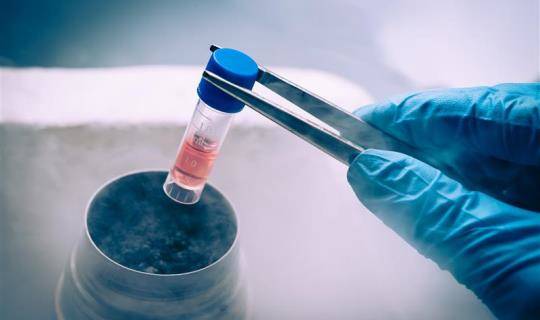
World Courier uses validated packaging across all ranges — from refrigerated (+2 °C to +8 °C) to cryogenic (≤ –150 °C in liquid nitrogen vapor phase) — with continuous monitoring every 15 minutes. Alerts trigger immediate escalation before any risk to the therapy. “Our technology shows when a shipment’s temperature is trending high or low,” explains Eric. “That early visibility lets us protect the therapy before there’s any chance of impact.”
3. Guarantee chain of identity and custody
A break in traceability is unthinkable in autologous therapies. World Courier safeguards the therapy’s identity from the moment cells leave the patient to the moment they return. Each hand-off is logged, verified and auditable. “When every shipment links back to a single patient, there can be no uncertainty,” says Eric. “That’s why we build our processes around absolute traceability.”
4. Provide real-time visibility
Sponsors need constant reassurance — and instant answers.
Through GPS, mobile (cellular) data, and temperature-tracking devices, customers have 24/7 access to live data and downloadable reports. “They can see when the shipment is five kilometers out and prepare their team,” says Kelly. “That visibility builds confidence at every stage.”
5. Have a plan B for every shipment
Every route has variables: weather, customs, flight cancellations.
World Courier plans contingencies for each scenario — from alternate airports to standby drivers. “We pride ourselves on rapid, coordinated intervention,” says Eric. “If challenges arise, our teams act immediately to keep the therapy safe. Because at the end of the chain is a patient waiting.”
6. Use a controlled network — not just any carrier
Unlike global integrators, such as express parcel carriers, World Courier never treats therapies as mere freight.
Where third-party partners — known as local service providers (LSPs) — are needed, they are performance-vetted and trained to the same standards as our in-house teams. “We’re not moving everyday parcels,” Eric says. “Every partner we use understands that this commodity can be life critical.”
7. Respond fast to alerts
Speed of response defines success.
If temperature or location alerts trigger, customer service and operations teams coordinate immediately, combining technology with human action. “We inform the client, deploy local teams, and manage the situation in real time,” Eric explains. “Technology detects — people resolve.”
8. Design flexibility into workflows
No two therapies follow the same path.
World Courier designs processes that adapt to each sponsor’s requirements — from after-hours pickups to bespoke documentation and just-in-time delivery models. “Some hospitals can’t store dry shippers,” says Kelly. “We build flexible solutions, so the therapy arrives exactly when and where it’s needed.”
9. Capture and share performance data
Proof matters.
World Courier continuously monitors on-time performance and deviation rates across its network — typically achieving a rate of 99.6%* on-time delivery for time-critical shipments. That transparency helps sponsors validate their own compliance metrics and demonstrates reliability to regulators.
10. Build sustainability into your supply chain
Efficiency and responsibility go hand in hand.
World Courier uses reusable packaging systems across all temperature ranges and continually evaluates new materials to reduce waste and emissions. “Clients increasingly ask about sustainability,” Eric says. “Reusability isn’t just good practice — it’s becoming an expectation.”
The difference partnership makes
For Kelly and Eric, success isn’t measured in percentages — it’s measured in patient outcomes.
“We never lose sight of the patient behind every shipment,” says Kelly. “That responsibility drives the precision and care we bring to every delivery.”
World Courier’s consultative model — engaging early, planning collaboratively, and responding decisively — turns logistics from a potential risk into a strategic advantage, delivering certainty for life-changing therapies.
Topics:
Cell and gene therapy