What is cold chain logistics? A complete guide
By World Courier

What is cold chain logistics?
Cold chain logistics refers to the controlled transportation and storage of temperature sensitive products. These products must remain within strict temperature ranges throughout the supply chain to maintain their quality and effectiveness.
The system combines refrigerated storage, specialized transport, and real time monitoring to ensure conditions remain stable from production through to delivery. Even small temperature deviations can compromise a product, which is why every stage is closely managed.
For pharmaceutical companies, this is critical. Vaccines, biologics, and other therapies depend on stable conditions to remain viable. Learn more about pharmaceutical cold chain solutions.
What are the key components of cold chain logistics?
Cold chain logistics depends on a set of interconnected elements that work together to maintain temperature control throughout the journey.
Temperature control
Maintaining precise temperature ranges is central to cold chain logistics. Cooling systems are used across storage facilities, processing environments, and transport to keep products within their required limits.
Learn more about temperature control solutions.
Specialized equipment for cold storage
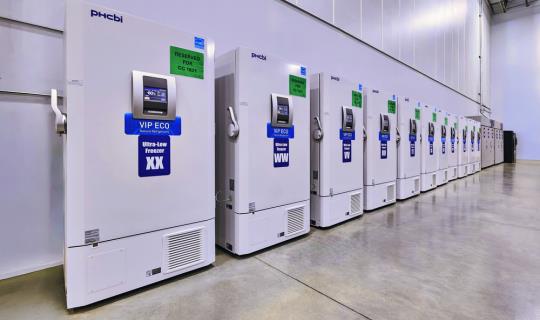
Cold storage facilities such as refrigerated warehouses and controlled temperature rooms are designed to hold products at consistent conditions. These environments are built to minimize temperature variation and protect product stability over time.
Cold chain transportation
Cold chain transportation involves moving goods using temperature controlled methods such as refrigerated trucks, insulated air freight containers, and active cooling units. These systems support cold chain distribution across local and global routes while keeping products within their required ranges.
Insulated packaging
Thermal packaging plays a key role during transit. Materials such as gel packs and dry ice help maintain internal temperatures and protect products from external fluctuations.
Explore temperature control packaging solutions.
Monitoring technology
Monitoring systems provide real time visibility into shipment conditions. Technologies such as IoT sensors, GPS tracking, and data loggers allow teams to track temperature and location, with alerts triggered if conditions deviate.
Learn more about tracking technology.
What are the product temperature ranges within cold chain logistics?
Different products require different temperature ranges depending on their sensitivity and stability requirements.
| Temperature range | Description | Example products |
|---|---|---|
| Chilled (+2°C to +8°C) | Used for products that require stable refrigerated conditions | Vaccines, insulin, monoclonal antibodies |
| Frozen (-18°C to -30°C) | Used for products that require deep freezing | Plasma derivatives, certain drug intermediates |
| Deep frozen (-60°C or below) | Used for highly temperature‑sensitive pharmaceutical materials, such as active pharmaceutical ingredients (APIs) | MRNA vaccines, advanced biologics |
| Cryogenic (-150°C or below) | Used for ultra‑low temperature storage using liquid nitrogen | Cell and gene therapies (CGTs), stem cells, CAR-T therapies |
What is the importance of cold chain in the pharmaceutical industry?
The importance of cold chain in pharmaceutical industry operations lies in its ability to protect product integrity and patient safety.
Quality and safety assurance
Cold chain systems help prevent degradation and contamination. By maintaining the required temperature range, pharmaceutical products retain their intended properties and can be used safely.
Learn more about our compliance expertise.
Waste reduction
Temperature excursions can lead to product loss. By maintaining control throughout transit and storage, cold chain logistics reduces waste and protects valuable inventory.
Compliance
Pharmaceutical logistics must meet strict regulatory requirements set by organizations such as the FDA and WHO. Temperature control, validated packaging, and documented processes help ensure compliance across the supply chain.
What are the potential challenges within cold chain logistics?
Managing cold chain logistics presents a series of operational challenges, especially as supply chains become more complex.
Temperature control and spoilage
Maintaining precise temperatures remains one of the biggest risks. Even brief deviations can render products unusable.
Real time monitoring and validated packaging help reduce this risk by enabling early intervention.
High costs
Cold chain operations require specialized equipment and energy intensive processes, which can increase costs. Improving energy efficiency and optimizing transport routes can help manage these expenses.
Complex global logistics
International shipments must navigate different regulations and customs processes. Delays can compromise temperature control. Strong documentation, pre clearance processes, and experienced logistics partners help reduce disruption.
Infrastructure gaps
Outdated facilities or limited cold storage capacity can affect temperature consistency.
Investment in modern infrastructure and mobile cold storage solutions can improve reliability.
Managing diverse temperature requirements
Shipments that include multiple temperature ranges add complexity to handling and transport.
Segmented packaging and multi zone refrigeration help ensure each product remains within its required conditions.
Why choose World Courier for your cold chain logistics?
World courier supports pharmaceutical companies with specialized cold chain logistics solutions designed for high‑value and time‑sensitive products.
With a global network and deep expertise in temperature‑controlled transportation, world courier provides end‑to‑end support across the pharmaceutical supply chain. This includes validated packaging, real‑time monitoring, and compliance expertise that aligns with industry requirements.
Explore our approach to the pharmaceutical supply chain and how we support complex logistics needs.
What are the two types of
cold chains?
The two main types are refrigerated (chilled) and frozen cold chains. Refrigerated chains maintain temperatures between 2°C and 10°C and are commonly used for vaccines and biologics. Frozen chains operate below freezing and are used for products that require deeper temperature control.