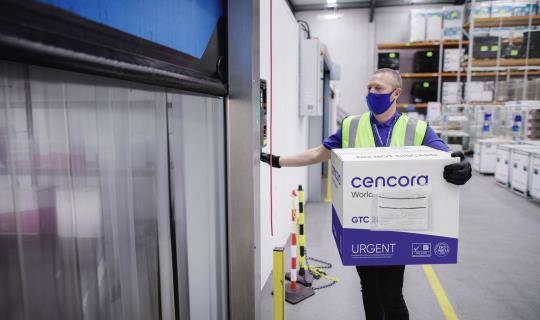
The next outbreak won't wait: what pharmaceutical supply chains should be preparing for now
By World Courier

While each disease presents different challenges, they all expose the same underlying question:
How quickly can healthcare organizations respond when every day matters?
Much of the attention during an outbreak focuses on vaccine development, treatment availability and public health interventions. These are, of course, critical. But they are only part of the picture.
The ability to move vaccines, treatments and diagnostic materials safely, efficiently and in compliance can be just as important in determining how effectively an outbreak is contained.
For pharmaceutical companies, preparedness means more than having the right products available. It means ensuring the supply chains supporting those products are ready to perform when the unexpected happens.
Preparedness begins long before the first case is reported
One of the most enduring lessons from recent outbreaks is that resilience cannot be built during a crisis.
As Remo Hanselmann, Director, Commercial Supply Chain at World Courier, explains: “One of the biggest misconceptions about outbreak preparedness is that it begins when a crisis emerges.
“In reality, the supply chain teams that respond most effectively are the ones that have already invested in resilient supply chains, trusted partnerships, and response plans before the first case is even reported.”
The importance of this approach is clear as pharmaceutical manufacturers face a more complex infectious disease landscape. Climate change, urbanization, globalization, and evolving disease patterns are creating new risks and increasing the likelihood of outbreaks emerging in unexpected locations.
This reflects findings from World Courier's Infectious Disease Report, which identified climate change and global connectivity as key factors shaping future infectious disease risks.
No organization can predict where the next outbreak will emerge.
What matters is having the capability to respond quickly when it does.
Outbreak preparedness is an end-to-end challenge
When people think about vaccine logistics, they often picture the final delivery. In reality, outbreak response depends on an entire supply chain working together under significant time pressure.
From the movement of active pharmaceutical ingredients (APIs) and raw materials through to manufacturing, storage, international distribution, and last-mile delivery, every stage plays a critical role in ensuring vaccines reach the people who need them.
A disruption at any point can create delays that impact healthcare workers, patients and public health efforts.
Effective preparedness therefore requires healthcare leaders to consider:
• How quickly critical materials can be moved to manufacturing sites
• Whether temperature-sensitive products can be protected throughout the journey
• How efficiently customs and regulatory requirements can be managed
• Whether global distribution networks can adapt to changing demand
• How vaccines and treatments can reach remote or underserved communities
Preparedness is not a single capability.
It is the ability to maintain control across the entire supply chain when conditions become unpredictable.
What leading organizations are doing differently
As infectious disease risks evolve, leading pharmaceutical organizations are taking a broader view of resilience.
Rather than focusing solely on transportation, they are assessing the strength of their entire response capability.
This includes:
Building supply chain visibility
Real-time monitoring and tracking help manufacturers understand where products are, identify potential disruptions early and make informed decisions when circumstances change.
Strengthening cold chain capabilities
Many vaccines and biologics remain highly temperature sensitive. Maintaining product integrity throughout transport is essential, particularly when responding to urgent public health situations.
Planning for regulatory complexity
Outbreaks often require products to move across multiple countries within tight timeframes. Having documentation, customs processes and compliance requirements prepared in advance can significantly reduce delays.
Expanding global reach
Outbreaks do not always occur in locations with established healthcare infrastructure. Organizations are now looking for partners with the ability to reach challenging locations and underserved regions quickly and reliably.
Developing response plans before they are needed
Perhaps most importantly, preparedness is becoming a proactive activity rather than a reactive one. Companies are investing time in understanding potential vulnerabilities and creating plans that can be activated rapidly when required.
When every day matters
The importance of preparedness becomes most visible during an active outbreak.
In a recent response effort supporting healthcare workers in Rwanda, World Courier moved from initial customer contact to delivering vaccines to frontline responders in just seven days.
The operation required rapid planning, coordination across multiple stakeholders, specialist cold chain expertise and the ability to manage complex logistical requirements under significant time pressure. Read the full Rwanda case study.
While every outbreak is different, the principles remain the same.
- Speed is critical
- Visibility supports better decision-making
- Coordination keeps response efforts moving
- Preparation creates the foundation for all three
“Preparedness has to exist across the entire vaccine supply chain,” said Remo. “A vulnerability in raw material movement, manufacturing, storage, global distribution or last-mile delivery can create delays at exactly the point when healthcare systems need that speed and certainty.”
The next outbreak won't wait
The most effective outbreak responses are built long before they are needed.
Investing in supply chain resilience, cold chain infrastructure, global reach and response readiness today can help reduce risk, accelerate response efforts and strengthen public health outcomes when future outbreaks occur.
The time to prepare is before the next outbreak begins.
/infectious-disease-report-cover-(2)/infectious-disease-report-cover-(3).png?h=757&iar=0&w=1350&hash=4B6732A6B74868602618A2A6C0344DDC)