
The strategic logistics partner playbook for resilient pharmaceutical supply chains
Procurement isn’t purchasing logistics anymore — it’s buying risk reduction
Pharmaceutical procurement teams are redefining how logistics partners are evaluated. Increasingly, the priority is not simply transportation cost but the ability to reduce operational risk, improve visibility, and safeguard supply continuity across complex global supply chains.
The hidden metric in logistics procurement: the cost of failure
One of the most overlooked aspects of logistics procurement is the true cost of supply chain failure.
Procurement teams often evaluate suppliers based on invoice price and service levels, but in pharmaceutical supply chains, these metrics rarely reflect the true cost of failure.
These impacts can include:
- Product loss or spoilage
- Missed manufacturing windows
- Regulatory investigations
- Additional quality assurance workload
- Drug shortages
- Lost commercial opportunities
Mads Skovvang, Product Manager for Commercial Supply Chain at World Courier, says these risks are often underestimated.
“If procurement only looks at the invoice price and not the value of shipments that arrive without incident, they may miss the full picture.
“For high-value pharmaceutical products, even a single logistics failure can create cascading operational and financial consequences.”
This is why procurement is no longer simply purchasing logistics — it’s buying risk reduction.
Procurement’s mandate is expanding
Procurement leaders today operate in a far more complex environment than they did even a decade ago. In addition to delivering cost efficiencies, procurement functions are increasingly responsible for supply continuity, regulatory compliance, supplier collaboration and sustainability performance.¹
Recent research highlights the scale of this shift. Among global procurement leaders, 74% identify maintaining alternative supply sources as the most effective risk-mitigation strategy, while 64% prioritize supply chain visibility and 61% emphasize supplier collaboration and information sharing.²
These priorities reflect procurement’s expanding organizational influence. In 2024, 44% of procurement teams reported to the Chief Operating Officer, compared with 26% the previous year, suggesting a stronger alignment with operational outcomes rather than purely financial oversight.1
According to Mads, this evolution is reshaping how procurement teams evaluate suppliers.
“Procurement teams are under increasing pressure to drive savings and cost efficiencies. That pressure often moves directly to suppliers. But at the same time organizations expect procurement to reduce risk across the supply chain.” For pharmaceutical supply chains, where product availability and regulatory compliance are critical, this dual mandate creates a new challenge: delivering cost efficiency while maintaining operational resilience.
Why resilience became a procurement priority
The COVID-19 pandemic exposed vulnerabilities in highly-optimized global supply chains, particularly those built around just-in-time inventory models.
In response, many organizations have strengthened supply resilience by diversifying suppliers, improving inventory visibility and building redundancy into logistics networks.
Mads has seen this shift across pharmaceutical supply chains. “After the pandemic, companies started moving away from purely just-in-time supply chains. There is now much more focus on risk mitigation and resilience,” he says.
These changes reflect a broader trend identified by procurement analysts, who describe today’s operating environment as one of persistent disruption shaped by geopolitical uncertainty, inflation pressures and supply instability.1
For procurement teams, strengthening supply resilience has become a strategic priority rather than a purely operational concern.
Why pharmaceutical supply chains heighten procurement risk
Supply chain disruption affects every industry, but pharmaceutical supply chains face unique vulnerabilities due to regulatory oversight, product sensitivity and globalized manufacturing networks.
Drug-shortage analysis illustrates the complexity of these supply systems. In Europe, 67% of shortages are linked to demand increases and 27% to regulatory compliance pressures, while in the United Kingdom 80% are attributed to demand surges and 20% to upstream active pharmaceutical ingredient (API) constraints.3
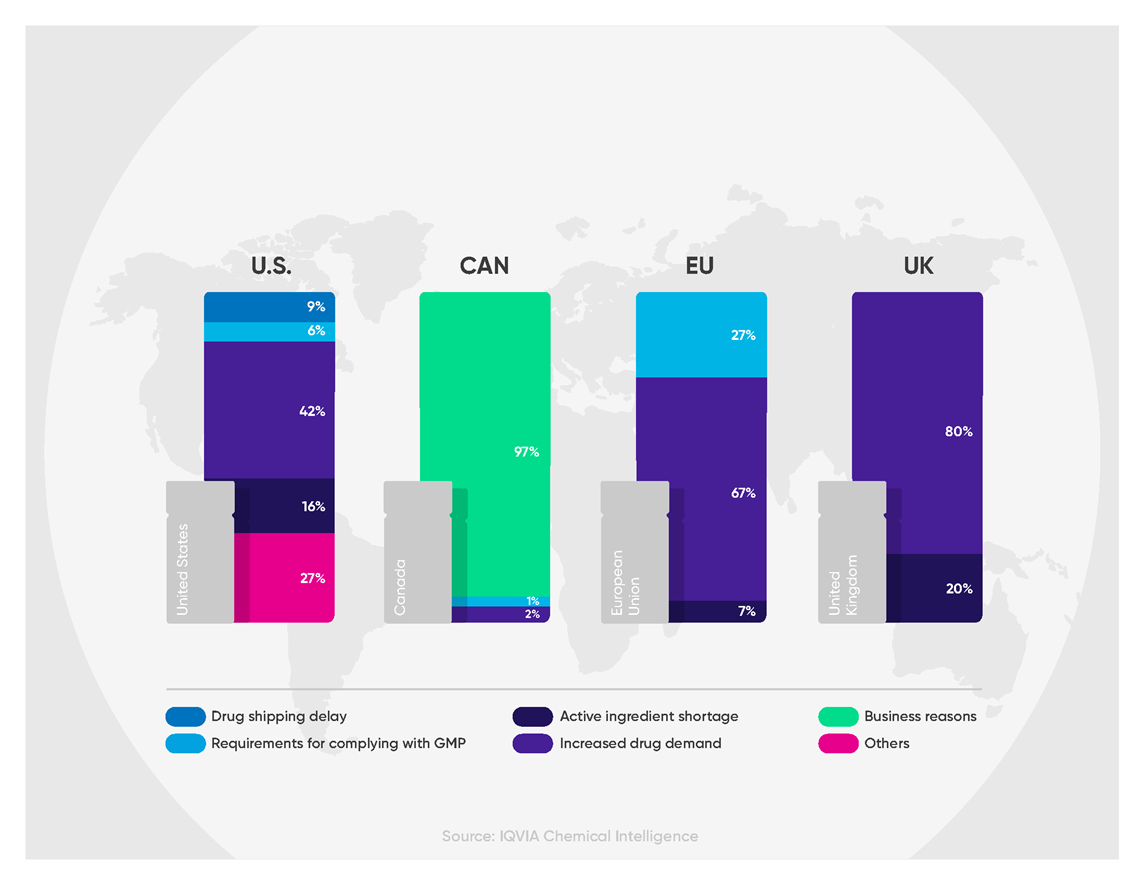
Manufacturing concentration further increases risk exposure. Data cited in pharmaceutical supply analyses indicates that 49% of finished-dose manufacturing capacity for shortage medicines is located in the United States, with significant additional production concentrated in India and Europe.3
These structural characteristics mean logistics reliability becomes critical to maintaining product availability and regulatory compliance across global pharmaceutical supply chains.
What procurement teams mean by a ‘strategic logistics partner’
As procurement priorities evolve, expectations placed on logistics providers are also changing. Rather than acting purely as transport suppliers, logistics partners are increasingly expected to contribute proactively to supply chain performance.
According to Mads, proactivity is a defining feature of strategic logistics partnerships.
“When procurement teams talk about strategic partners, they expect suppliers to proactively present improvement initiatives. That could be operational efficiencies, cost reductions, or changes in logistics setup that improve the supply chain,” he says.
In practice, these improvements may involve:
- Route optimization
- Carrier strategy adjustments
- Packaging redesign
- Temperature-control strategy improvements
- Enhanced shipment visibility
These interventions allow procurement teams to strengthen supply resilience while identifying operational efficiencies.
The three qualities procurement teams expect from logistics partners
Across both research and practitioner interviews, three characteristics consistently define high-performing logistics partnerships: proactivity, transparency and reliability.
Proactivity
Strategic suppliers actively identify improvement opportunities rather than simply executing instructions.
“Sometimes a logistics setup was designed 10 years ago, and no one has challenged it since,” says Mads. “A strategic partner should identify those opportunities and suggest improvements.”
That may involve reassessing carrier strategies, packaging configurations or temperature-control approaches to improve resilience while maintaining cost efficiency.
Transparency
Real-time communication is critical when disruptions occur.
“A shipment can be delayed,” says Mads, “but the information cannot.”
Increasingly, transparency also depends on real-time monitoring technologies that allow procurement teams and supply chain managers to track shipment status, location and environmental conditions throughout the journey.
“Procurement teams want visibility,” Mads explains. “With real-time logistics monitoring and temperature tracking, they can see exactly where shipments are and whether conditions remain within specification. That level of transparency makes a big difference when you’re managing high-value or time-sensitive medicines.”
Reliability
Ultimately, logistics providers are responsible for ensuring that medicines reach their destination safely and compliantly.
“What we are really selling is peace of mind,” explains Mads. “That reliability extends beyond transportation to include validated packaging, temperature monitoring, regulatory documentation and proactive intervention when conditions change during transit.”
For pharmaceutical companies, reliability means knowing that logistics partners have the infrastructure, technology and expertise required to protect product integrity from origin to patient.
Why supplier consolidation is accelerating
Another trend reshaping procurement strategy is supplier rationalization.
Large pharmaceutical companies often maintain extensive networks of logistics providers across regions and product categories. Managing these relationships can create operational complexity and administrative overhead.
Highlighting the scale of the challenge, Mads says: “One customer recently told me they were managing around 120 transport contracts globally.”
Reducing supplier numbers allows organizations to simplify contract management, improve operational coordination and strengthen collaboration with key partners. This trend reflects procurement’s broader shift toward strategic supplier ecosystems rather than fragmented vendor networks.
The future procurement–logistics partnership model
Looking ahead, procurement teams will likely face increasing operational complexity while operating under resource constraints.
Research suggests procurement workloads are expected to increase by 8% in 2026, alongside decreases in both headcount and operating budgets, forcing teams to rely more heavily on digital tools and closer supplier collaboration.4
At the same time, regulatory and sustainability requirements are becoming increasingly influential in sourcing decisions. 66% of organizations report that regulatory and environmental, social, and governance (ESG) expectations will significantly influence strategic sourcing over the next three to five years.5
Artificial intelligence and procurement technology are also expected to reshape the function, with 80% of procurement leaders identifying AI-enabled technologies as the most transformative development for procurement operations.4
These dynamics mean logistics providers will increasingly need to support procurement teams with data transparency, compliance documentation and operational visibility.
A new definition of logistics value
The evolving procurement landscape reflects a broader shift in how organizations evaluate supply chain partners.
While transportation remains essential, logistics providers are increasingly assessed based on their ability to support resilience, transparency and operational improvement across global supply chains.
In other words, pharmaceutical procurement teams are no longer simply buying logistics services.
They are buying risk reduction across increasingly complex supply networks.
For logistics partners capable of delivering proactive insight, operational reliability and real-time visibility, this shift creates an opportunity to move from transactional supplier relationships to true strategic partnerships.
Related content


Sources and research
- Economist Impact. Across the procurement-verse: Changing trends in the procurement function.
- Deloitte. Global Chief Procurement Officer Survey 2025.
- IQVIA. Mitigating Drug Shortages: Strategies for Resilient Pharmaceutical Supply Chains.
- The Hackett Group. The Agentic Enterprise: AI’s Real Progress in Procurement 2026.
- KPMG. Future of procurement 2024.